The edge · 600 ft · shelf break and canyons
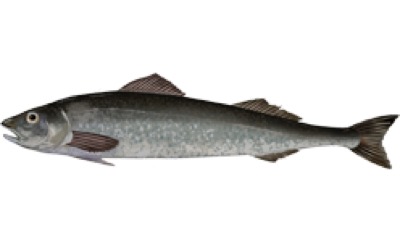
Sablefish (Black Cod)
Anoplopoma fimbria. Prime water reaches Neah Bay in Pacific Northwest right now (46°F on the bottom).
LaneThe edge · 100 fa (600 ft)
Depth it holds984–2953 ft
Prime water39–48°F (workable 39–54°F)
Holds in the column984–2953 ft down (on the bottom)
Judged onseabed temperature (RTOFS at depth)
Structurenone
The water column off Neah Bay
The strip is the water itself, coloured by temperature from the surface down to the 600 ft surveyed bottom at that spot — one band per RTOFS model level. The outlined stretch is where Sablefish (Black Cod)'s temperature band (39–54°F) and the depth it holds actually overlap. That thickness is the number that matters: it is how much water you can work, not just whether the spot is warm enough somewhere. One model cycle, not a weekly archive — this holds still while the surface map scrubs.
In 3D
Drag to rotate, pinch or scroll to zoom. 3D model traced from a U.S. Food and Drug Administration, United States government work; public domain reference — source.
How it's fished
Deep-drop bait on the slope in 1000-3000 ft — a long haul up for the best-eating fish out there.
Region by region — right now
| Region | Season | Prime water | Temp | Fish it at | Months |
|---|---|---|---|---|---|
| Pacific Northwest | in season | reaches Neah Bay | 46°F | — | J F M A M J J A S |
| California | in season | reaches San Francisco | 48°F | — | J F M A M J J A S O N D |
"Fish it at" is where this species' temperature band and its holding depth overlap in the water column, from the RTOFS profile (13 levels, 0–300 m) — the depth to actually put a bait, not just the place. "Prime water" is the furthest sampled station on the 100-fathom lane whose seabed temperature sits inside this species' band. It is water, not a sighting report.
Charted grounds on the 100-fathom lane