The grounds · 180 ft · banks, ledges and wrecks
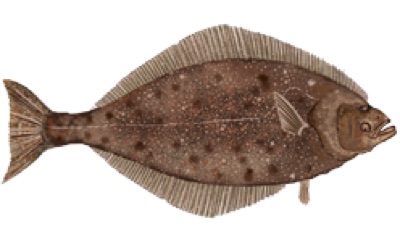
Pacific Halibut
Hippoglossus stenolepis. Out of season in every region we cover this month.
LaneThe grounds · 30 fa (180 ft)
Depth it holds131–656 ft
Prime water41–52°F (workable 41–55°F)
Holds in the column131–656 ft down (on the bottom)
Judged onseabed temperature (RTOFS at depth)
Structurenone
In 3D
Drag to rotate, pinch or scroll to zoom. 3D model traced from a NOAA Fisheries / Jack Hornady, Public domain; NOAA Fisheries illustration reference — source.
How it's fished
Big baits or jigs anchored on gravel benches near structure edges.
Region by region — right now
| Region | Season | Prime water | Temp | Fish it at | Months |
|---|---|---|---|---|---|
| Pacific Northwest | off-season | reaches Neah Bay | 48°F | 131–177 ft | J F M A M J J |
"Fish it at" is where this species' temperature band and its holding depth overlap in the water column, from the RTOFS profile (13 levels, 0–300 m) — the depth to actually put a bait, not just the place. "Prime water" is the furthest sampled station on the 30-fathom lane whose seabed temperature sits inside this species' band. It is water, not a sighting report.